
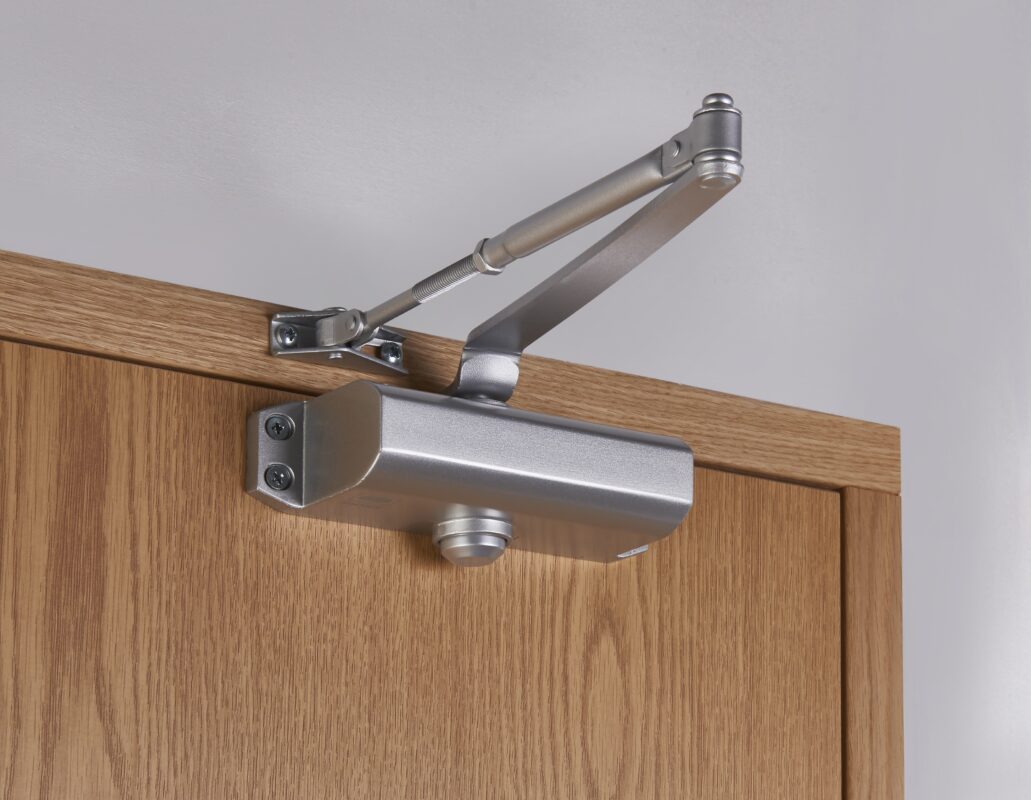
Adjusting a door closer is usually a matter of turning the right hydraulic valve a fraction – but doing it wrong (or forcing a leaking unit) can ruin the closer or the door. This guide explains how the adjustment screws work, how to set a safe closing speed, and when to stop and call a professional. A well-set door closer should shut the door smoothly in just under 10 seconds.
Find the valves
The adjustment valves sit either on the outside of the closer body for easy access, or inside behind a cover. If they’re internal and there are no visible clips holding the cover, it’s usually held on by tension. Before adjusting anything, check for oil: if there’s oil inside the cover or dripping from the body, stop – a leaking closer is failing and should be replaced, not adjusted.
Understand the adjustments
Commercial door closers use spring pressure regulated by hydraulic fluid, which moves between chambers as the door opens and closes. Some closers come with an adjustment chart or instructions – worth checking first.
Make the adjustments carefully
There are usually two or three valves. Start by gently closing them all, then adjust:
- “L” (latch) and “S” (sweep/swing) control the closing speed at different points of the swing.
- “BC” (backcheck) stops the door from opening too far.
Turn the valves with a screwdriver or Allen key – clockwise until they stop, then counter-clockwise a little to let the door open or close more. Small turns only; these valves are sensitive.
Test the result
Open and close the door several times to check the speed. A commercial door closer should close smoothly in just under 10 seconds. If pressure issues persist, a slightly slower closing speed helps release the built-up pressure. Occasionally a door needs adjusting before it will close and latch properly – if it still won’t behave, it’s time to call a professional. We also handle glass door and mirror work if related fittings need attention.
Frequently asked questions
What do the L, S and BC valves do?
L and S control the closing speed at different stages of the swing; BC (backcheck) limits how far the door opens.
How fast should a door closer shut the door?
Smoothly, in just under 10 seconds for a typical commercial door.
My door closer is leaking oil – can I fix it?
No – a leaking closer has failed internally and should be replaced rather than adjusted.
When should I call a professional?
If small valve adjustments don’t fix the speed or the door won’t latch properly, get a professional to inspect or replace the unit.
Need help with your doors?
For glass doors, closers and automatic doors done right, contact IST Works L.L.C: call +971-4-5645719, WhatsApp +971-54-3085166, or use the contact page. See our office glass doors and automatic doors.
Pingback: Gym Mirrors with glue pasting - Wall Mirror Installation in Dubai